

Daddy Ball
Parents blame bad coaches. Coaches blame toxic parents. Who's right?

More than 1,000 of you responded to a reel I posted about two 13-year-old boys who walked away from baseball. Three thousand likes and a half-million views across Instagram and Facebook. The comments came from everywhere. Parents, coaches, former players. Some were funny. Some were heartbreaking. Some were both.
One word kept showing up. Daddy Ball.
A dad in Wisconsin told me about his son — top 15 fastest kid in the state, played on a team that hadn’t lost in three years. When they walked him to avoid home runs and RBIs, he took it as a challenge and stole. Then they moved up to a new team and the dad coaches buried him in the batting order behind the slowest kid on the team. Went from shortstop and center field to the bench. Led the team in OBP, RBIs and steals anyway. Hit the team’s only home run. Hasn’t played another season since.
Then there was this from Dr. Randi Taylor-Toomay, head coach of the women’s volleyball team at the University of La Verne: “It’s not what we’re not giving them. It’s what we ARE giving them. Year round travel, no breaks, daddy ball dominates Little League and lacks development, lack of choice and time to play other sports leads to over-specialization, and finally you’ve got all the classic signs of burnout before they turn 13.”
Basketball coach Nick Aldiero from New Jersey had a different take for me and his 68k followers. “There is an overwhelming amount of parents who ruin sports for their own children as well as others. Big children — the adults — have made it about themselves. Constant pressure, sideline coaching, talking poorly about other players and coaches.”
The comments in the thread highlight the tension between parents and coaches.
So who is to blame for driving kids from the game: dad coaches or toxic parents?
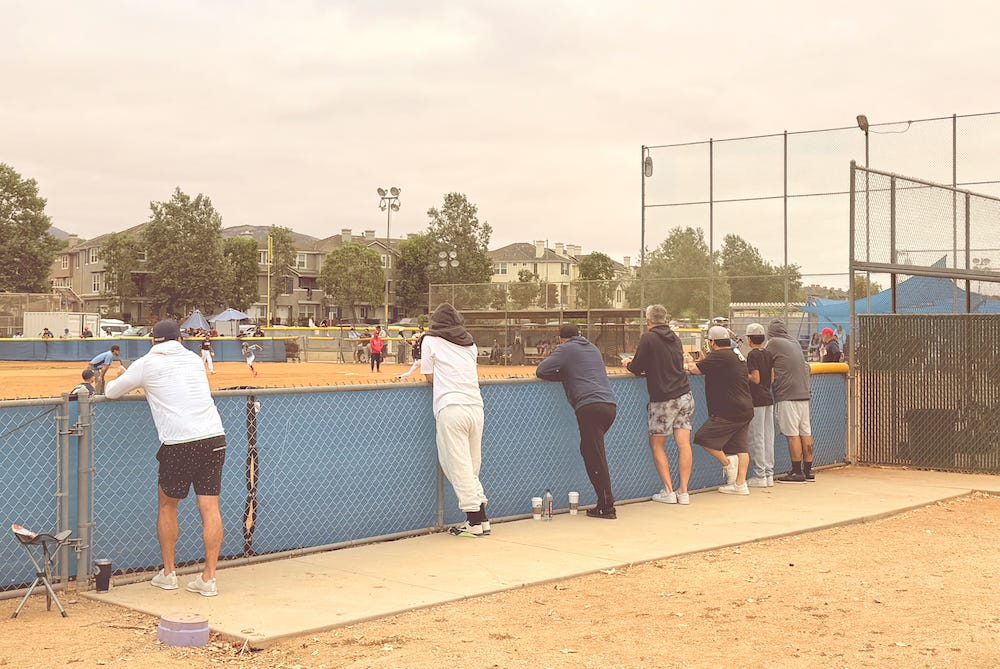
In our neighborhood, like a lot of neighborhoods in Southern California, there’s a travel baseball organization that’s been around a long time. Deep community roots. Rosters are filled mostly with local kids. The little ones see the older kids in the swag — the hats, the dry fits — and want in. Entry-level travel ball at a price that doesn’t bust the budget. For a lot of families, it’s the perfect on-ramp.
The downside is almost always the same: Daddy Ball.
When you’re local and low-cost, you get volunteer coaches. And volunteer coaches are almost always dads. And dads coaching their own kids almost always creates tension. Sometimes a little. Sometimes a lot.
A few years ago, the age group my son played for had two teams — an A team and a B team, both coached by dads. Alex played on the A team. A familiar pattern emerged. The coaches’ kids tended to bat at the top of the lineup and play the premium positions. It happened enough that parents started talking about it in the stands. Kids started noticing too. Once the kids start noticing, it becomes a bigger problem.
One moment proved to be the tipping point. The manager was asked to partially fill a USA Baseball roster. You can guess what kids were selected.
We called a parent meeting with all three coaches. It went okay. Not great. Not long after, that team dissolved and the B team did too.
Looking back, I’m not sure I would do anything differently. That team proved to be a good incubator for Alex, a foundational block. He learned a lot, and nothing about baseball is perfect.
If your kid doesn’t like his coach or the team he’s on, it’s okay to switch teams, but there’s a way to do that cleanly. I explain how and share other tips in two guides I’ve prepared for you: Travel Team Gut Check and The Baseball Parent Game-Day Guide.
They will ramp down game-day pressure, protect your relationship with your kid, and help you make better travel ball decisions.
$20 or free with a paid annual subscription. Get them here.
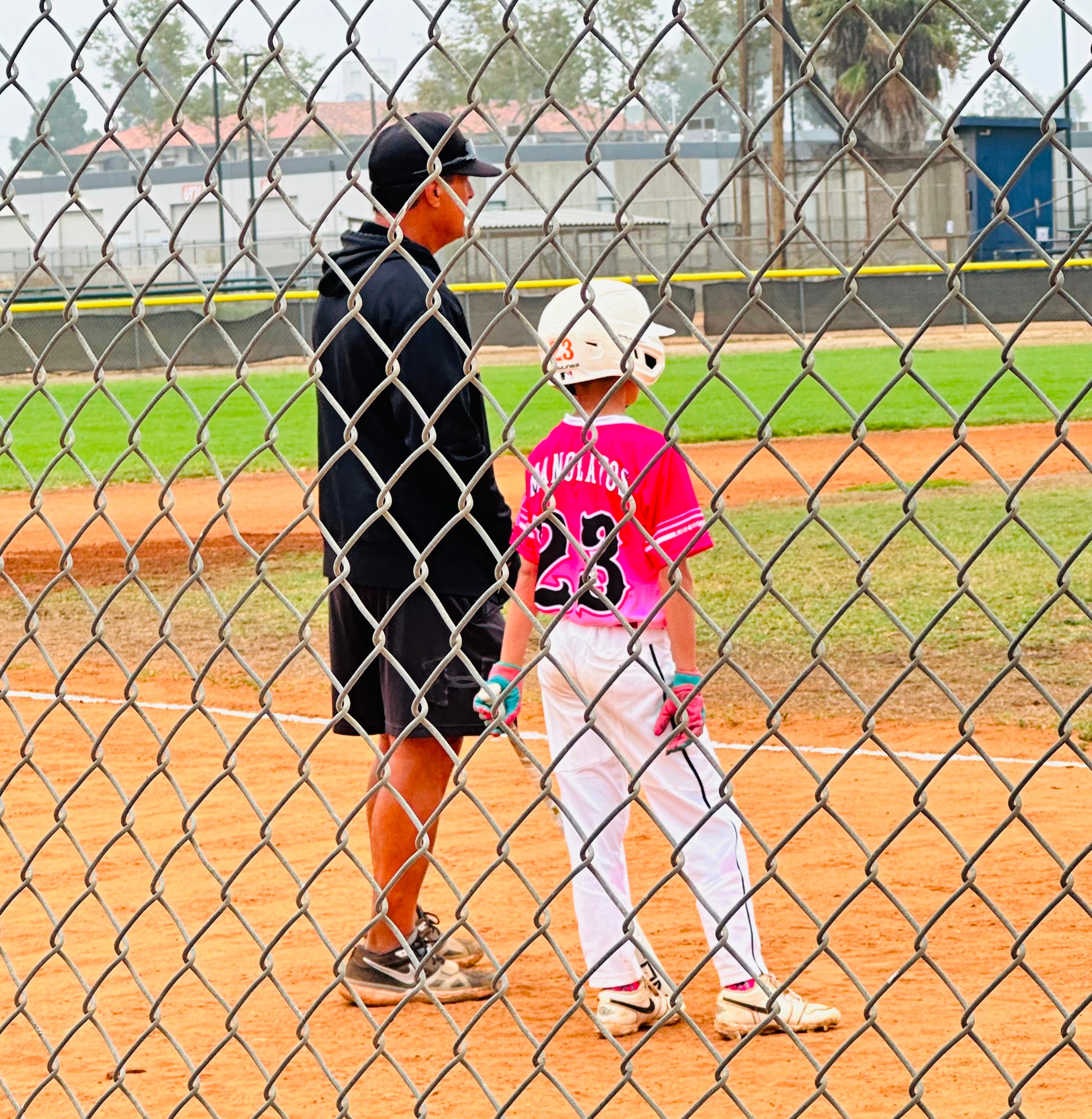
Soon after my son’s first travel ball team splintered, the director got involved. This is a man with deep roots in the community, deep roots in baseball, a guy who knows these kids and their families and has seen everything youth baseball can throw at you.
He invited several of us to his house. Sat us down in his living room and told us he was going to create something new — a national team, coached by himself and other professional coaches. Paid coaches. A couple of recent college grads who played the game. And a friend of his who had played in the minor leagues.
I don’t think anyone walked out of that room saying no.
That next season was one of Alex’s best. I’ve thought about why.
It was the coaches. The coaches liked him and he liked them. That sounds simple but it isn’t. When a kid connects with a coach — really connects — he plays differently. Looser. Faster. With more confidence.
One coach in particular, the former minor leaguer, took Alex under his wing. They joked around a lot. If Alex smoked a liner right to the center fielder, this coach — whether he was at first base or in the dugout — would holler: Stop hitting it right to people, you big dummy!
Alex loved it. That kind of thing — a coach who can make a kid laugh in the middle of a tight game — is rarer than it should be. It loosens everything up. It’s the opposite of pressure.
In Arizona about 15 months ago, at what turned out to be Alex’s last tournament with that team, there was a play at second base. One of those big bouncing ground balls you can’t sit back on. You have to charge it, field it on the move, and make the pick. If it gets by you, it looks bad. When you make it, it looks beautiful.
Alex made it. Inning over. As he came off the field one of his coaches slapped his hand and said: Attaboy! That’s how I taught you to play infield. Those two still train together. He’s Alex’s fielding coach and probably will be for the foreseeable future.
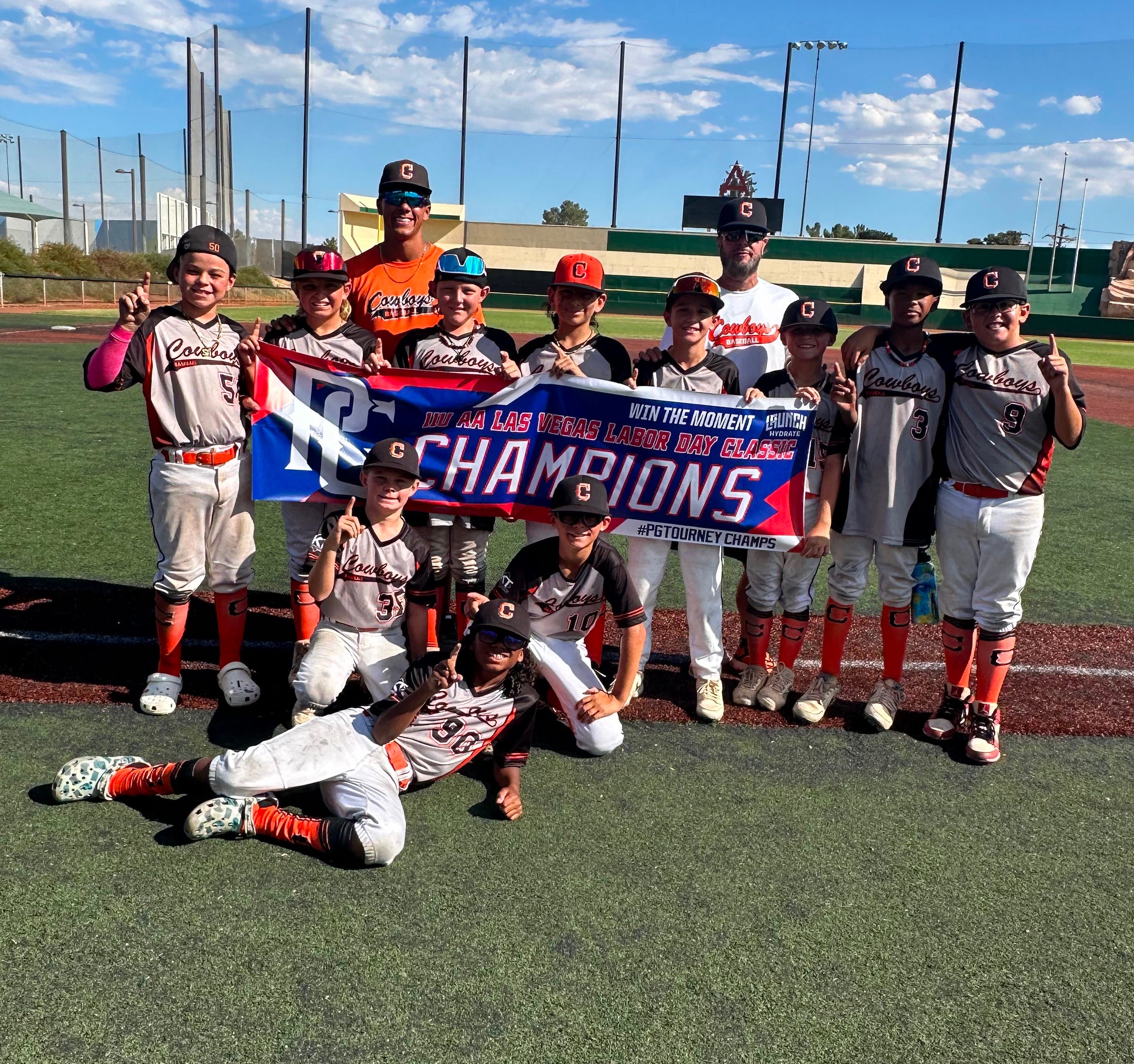
Alex moved on to a different team after that season. Left on good terms. We’re still in touch with all of those coaches.
A lot of professional travel ball organizations mention it early in that first conversation with new families: No daddy ball. No dad coaches. It’s a selling point that lands.
A lot of the kids on my son’s current team stopped playing Little League at a young age either because of Daddy Ball or because the level of play wasn't competitive enough. The expectations on his team are high and competition is constant, but there’s a lot of joy in the dugout. I can see it in how my son interacts with his teammates and coaches.
The coach who oversees all the younger teams, 9u to 12u, recently told Alex during a tournament that when he was growing up his family didn’t have much money, so before games and practices his dad would make him a bread and banana sandwich. Told Alex he should try one sometime, “and don’t be afraid to slap some peanut butter in there.”
Alex came home and told me about it. Said he wanted to try a bread and banana sandwich. I made him one. He’s been eating them ever since.
The coaches your kid plays hardest for build a bubble around their teams. It blocks the noise. It's where the relationship lives. It travels too.
The competitive parents griping in the stands and adding pressure, the dads in the dugout who play favorites and damage culture and confidence—they leave something behind too. We all do. The question is what we want that to be, and whether we even see it.
Daddy Ball coaches don’t see it, and if they do they ignore it. There’s a reason they get a bad rap. Too often they leave behind bad memories.
Great coaches leave something else behind, something more important than better footwork and tighter swings. They’re not perfect but they know how to influence, motivate, and instruct while building confidence—not tearing it down. That’s rarer than it should be.
“TONY,” a Fullerton College coach with 40 years of experience said in a comment on my reel. “We can take a game these kids love and make them hate it and not come back. Or we can teach them to be a good person, not necessarily a good player, but a good person. Most coaches are not taking the time or making the effort to see that these kids grow up to be good people, not just good ballplayers.”
###
Go Deeper
Some of you are dealing with issues that keep you up at night: Your kid can’t recover after an error. He doesn’t like his coach. He’s constantly checking GameChanger and comparing himself to his teammates. He wants to quit.
That’s what my one-on-one coaching sessions are for.
Visit my Stan Store to book a coaching session, email questions, order playbooks, or inquire about speaking.
About Baseball Dad & PR Guy
Baseball Dad & PR Guy is a weekly newsletter about youth sports culture and how parents and coaches shape the experience for young athletes.
Subscribers also get what I use after games—what to say, and what to leave unsaid on the ride home.
My essays are built around the 5 Moments That Shape Young Ballplayers, from the nerves before a game to the car ride home.
From the stands, I write about those moments and what they mean for confidence, identity, and a kid’s love of the game.
Read more about the 5 Moments and why they matter.
⚾ Join the conversation: Travel Baseball Moms & Dads (Facebook)
⚾ Follow along: Tony Manolatos – Baseball Dad & PR Guy (Facebook)More at tonymanolatos.com
It’s a mixture of both. Every coach that has a son on the team should not coach that team. It’s never a good situation.
Parents all think their kid is going to be the next big star.
Mix the two together and it ruins the experience for the kids.
I’ve been on both sides of the ball. Player, coach, and umpire. Umpiring truly opened my eyes to the ridiculousness.
Coaches playing their kids and other relatives ahead of far better players. Coaches not coaching, or even ignoring those that may need a little extra, over “better” players.
Parents coaching from the stands. It confuses the player. Who are they supposed to listen to? I have benched a player when they’ve gone against my call in favor of their parent’s. There has to be one leader on the field and I’m it.
Parents acting like total ass hats in the stands. It’s a kids game. Let them be kids and have fun. I’ve stopped games as an umpire until the parents have settled down or left the field.
Umps could be better also. Showed up to a game to ump and the other guy, I shit you not, says “hey, that’s my nephew over there. Be generous behind the plate.” I refused that game.
Adults really do ruin it for the kids.